
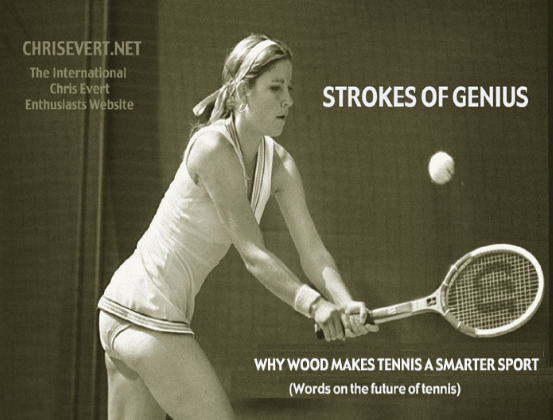
2003— It was the Age of the Wooden Racquet, in a sport originally played by Kings. This material was far more organic and akin to natural elements than metals and hard graphite composites. It was tennis played in its purest state; tennis as it was made to be; constructed so that a human being could run only-so-far on a court made to be exactly the size it is, based on the pace that could be generated from a wooden racquet from a swinging human arm and sprinting human legs. The ball was also constructed to fit within the parameters of these requirements, in the building of a sport that would be characterized by royal elements.
Tennis is known as the “Sport of Kings” for the very reason that it transcends the natural animal order of “Might Makes Right” into the realm of our higher nature, where the prowess of the mind -with focus and strategic maneuvering- can outweigh the dynamics of pure power. With tennis, the one with the biggest gun had to now add thinking to their arsenal in order to win, and engage the opponent in a War of Spatial Conversations -as if “making a point”- rather than winning by gunfire alone. Brute force, without the grace and guidance of the mind, would not win a greater majority of the points. Placing wits above brawn, tennis distinguished itself through this elevation of character.
(Because after all, the might of guns gets tiresome for Kings. And so there must come a higher challenge instead; one of integrity and the force of spirits. Now THAT’S a sport!)
It was in just such a magical world, now seemingly innocent and quaint in comparison, that a Chris Evert stepped forward to take her place on the Tennis Throne, and became the dominant force in the tennis world, alongside Bjorn Borg on the men’s side. Both made their ascension with play of pinpoint accuracy, unflappable concentration in the face of the greatest test of nerves, and a calm demeanor that allowed fate to play its hand fully without excuses. Because it would be more suitable to lose with dignity than win by any means beneath the best their character could summon.
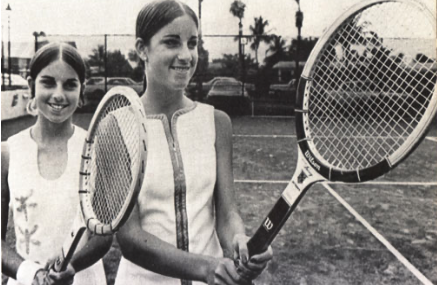
The integrity of the sport and the sport’s ability to discipline and refine its players (and better them as people by doing so) is dependent on the sport’s inherent structural challenges remaining intact. While there is nothing meant to suggest that pro tennis need return to wood racquets, there are many issues well worth considering regarding the altering of the sport from its classic roots of play.
The smaller racquet head of wood forces the player to concentrate harder to hit the sweet spot. This isn’t a DISADVANTAGE cured by the advent of mid and oversized racquets, but is a necessary test of a player’s ability to maintain unbroken concentration against rising external pressures. That’s essential to the discipline of the sport of tennis. Even a defining characteristic.
Adding unearned power, and making it easier to hit the ball by changing the materials and structural size of the racquet, cheats the players and audiences of the challenges presented by the sport of tennis. It gives the illusion of improvement when the change in performance is more due to shifts in equipment, rather than enhanced skill levels.
Professional Baseball does not allow players to use aluminum bats or to use cork in their wooden bats, because – while it increases power – the American Professional Baseball Association saw rightly that everyone was hitting home-runs and that making it “easier” on everybody to gain “success” was actually hurting the sport. Because it was a little bit like cheating.
The Establishment of Tennis has taken it further, however, rather than retreating, by also changing the construction of the ball so that it too would go even faster. This also cheats tennis of its thoughtful character, its textural character, its time-based character, from the merciless speeding up of the game. Time was built into the fabric of the game in order to allow for time to consider, to afford you the opportunity to change directions, to change the pace of your shot, or throw in a surprise drop shot. Time also allows for the possibility of having too much time to think, time to choke under pressure from the awareness of your match predicament, or the time to make a decision too late to change directions, and outwit yourself rather than your opponent. This is important stuff.
Borg has proposed that, while club and amateur players go on hitting as they like, that the pros return to wood. McEnroe has said it and written about it. If you’re among the best players in the world, you should surely be able to focus on a smaller sweet spot, generate your own pace, and win by displaying subtlety and variety in shotmaking rather than bludgeoning your opponent with casts of steel. Martina Navratilova recently publically endorsed, at the least, lessening the width of racquets, also being sure to insist that the game itself not be changed to accomodate the development of these super-charged excalibers. “Something needs to be done about the racquets,” says Navratilova. “The materials are ridiculous now. The game’s too easy with these racquets.”
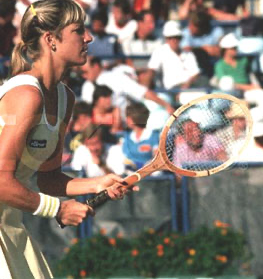
For the Ancient Greeks, sport represented the embodiment of the Hero’s Journey; a path of individual fulfillment, with sport as a spiritual discipline through which we humans could worship the Gods and Goddesses, who were seen as having an “active” physical presence. Sporting events surrounded the worship of the Gods and Goddesses – the Olympics, of course, developed at this time in history as a symbol of the human capacity to become as close as we could get to the Godhead of our own existence.
In this capacity, Chris Evert was as close to a Buddah as tennis has ever seen. Tranquil and impenetrable, with a consistency not matched by any player or team in any sport, over a full 20 year career, Evert’s game was an exercise in staying in the moment.
When the Romans conquered the Greeks, the focus of sport’s nature changed drastically to worship, not of the Gods and Goddesses, but to worship the state of Rome. The essence of godliness was taken out, and sport instead was seen as the fulfillment of Rome’s own practice of Conquest, with “Might Makes Right” as its central tenant. In this, the nature of competition was propelled to Blood Sport, fighting to the death in a Symbol of Brutality. And there are plenty of sports which already celebrate that sensibility!
But tennis is not here to make it easier on everyone to succeed, any more than training wheels are put on bicycles to make more-balanced riders. Yet tennis audiences, players, and officials seem to have resigned themselves to believing this direction of tennis is part of historical inevitability. They’re shrugging their shoulders and slugging their groundstrokes, having become so addicted to the increasingly blurring pace of the game–but perhaps losing perspective, in the process, on why they play. It’s not just to win.
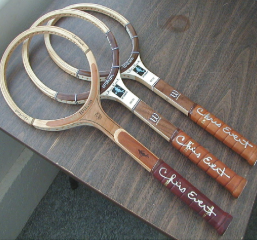 Want to try your hand at playing with a wood racquet? Exquisite brand new wood racquets are available at http://www.woodtennis.com/newWood/newWood.html where Joe Schartman has a marvelous collection of artful, classic, and yes, Chris Evert original Wilson wood racquets. Pictured to the right are 3 signed racquets by Chris. But don’t get any ideas. Joe says he’s keeping ’em!